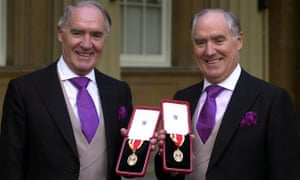
Put the pattern of things together. The Daily Telegraph announces a £150m writedown paid to the Barclay twins’ bank account – leaving a net book value of £300m if, perchance, the brothers are thinking of selling. Analysts reckon that’s exactly what they’re planning. Meanwhile the wider Daily Mail group lays off 400 employees and its financial director says it’s “unlikely” that selling is on the Rothermere agenda. No, cancel his last caveat. It’s “exceedingly unlikely”.
But such denials need to be exceedingly categorical these days. After all, the past few months have seen the little i paper sold to Johnston Press and the mighty FT sold to Nikkei of Japan. Would Mr Richard Desmond sell his shrinking Express and Star portfolios? Make him an offer and see. Mirror Group papers are a weighty part of Trinity Mirror’s scrabble for safety, so anything’s possible.
Even the Murdoch papers in the UK are clustered in an overwhelmingly news-oriented company far away from Fox and its TV riches, so that a bid for the Times and Sunday Times isn’t out of any question. And in America last week an embryo bid for Tronc, aka Tribune Online Content – elephantine successor to the simple Tribune Publishing Company of Chicago, which owns the LA Times, the Baltimore Sun and others among the US’s legacy finest – took __more insistent shape. Who’s bidding? Why, Gannett (itself now split into hard news and broadcast entities to keep Wall Street happy).
There are assorted trends on display here. One, as digital revenues flag and print advertising takes another cold bath (the Mail reported ad revenue 19% year-on-year down last month; and, of course, they are not alone) is a proprietorial urge to break free and move on. The Barclays have squeezed every scrap of cost savings out of the Telegraph titles they can find, but any future growth in revenues looks iffy to impossible while screwing up cover prices (a widespread technique) only makes papers weaker overall.
So why not get out while the going’s still relatively good (an operating profit at the Telegraph oscillating between £45m and £60m over past years)? Why stick around, as Richard Desmond may have done, till there’s not much left to sell? The same dilemma may one day be posed at the Mail, where newspapering is already a separate, diminishing part of group activities.
Investors still cherish great expectations too. Trinity Mirror and Gannett have share price and dividend problems to grapple with, even if Murdoch prefers a __more lordly relationship with his investors. But sooner or later the markets are there to be served.
All of which means that there won’t be many new runners as the batons of ownership pass. Gannett will still be trying to carve savings out of its latest portfolio – as well as trying to fill 11 desperate papers in south London with the work of just 12 reporters.

Any new publicly quoted companies in the line-up must feel the same whiplash of decline. Maybe there’ll be a random billionaire or two wanting a new toy: think Jeff Bezos of Amazon at the Washington Post. Perhaps we’ll be treated to a more random collection of influence seekers, as though news were some Premier League soccer staple. Conceivably some fresh crowdfunding initiatives will come along; though last month’s failure of Beacon, the US crowdfunding site for journalism, isn’t exactly euphoric news on this score.
It’s no easy picture, whether we’re talking news in print, news on the web, or both: because no broadly applicable financial models for any of these things currently exist. Journalism lies in the hands of a variety of individuals, corporations and foundations who must expect much red ink to flow for years to come. That doesn’t turn proprietors into plaster saints, but nor does it make them, as a class, into the ravening Citizen Hearsts of legend. It may even, coolly considered, prompt second thoughts about the life and times of Mr Rupert Murdoch. Yes, he can be a baleful influence (currently, as chairman of Fox News, cheerleading for Trump). But yes again, there’d be fewer titles, less innovation and much less money going into news without him.
And the inescapable fact is that there is no other template for supporting the resources that make many kinds of journalism possible. Free journalism needs the freedom to start, buy and own news organisations. Free journalism in an age of crumbling certainties has to be sustained by a range of possibilities – which doesn’t include a legion of anxious businessmen living in a government’s pocket, Ankara-style. Governments can’t own news operations: prime ministers and presidents are the squarest of pegs. Foundations need big money as well as high intentions. Silicon Valley’s finest range between zillionaire benefactors and manic foes of independent disclosure.
Of course the digital world’s top dogs – say Facebook, say Google – proclaim the importance of journalism in a free society. But they don’t always let deeds match their words. As many of the proprietors we have prepare to take a final bow, here’s a bleak moment to pause and ask: what’s next?
■ The Conservatives have just finished their conference: in Birmingham. The Conservatives have hopes of winning a major mayoralty: in Birmingham. And now the Conservatives seem keen to move Channel 4: to Birmingham. Potty gesture politics of the kind Mrs May is supposed to scorn.
Birmingham has a real broadcasting beef. The BBC presence there is relatively puny – second-rate stuff for England’s second city. But C4 only employs 360 or so staffers. It’s the tiny hub of a great commissioning wheel, spreading £150m-plus outside London. Shifting it to the West Midlands does nothing to alter that record and parks a national ad-driven channel too many train rides from Britain’s biggest ad market. In short, this is state tokenism based on profound ignorance that will redound to no one’s advantage: not C4, not Theresa, and alas, not Brum.