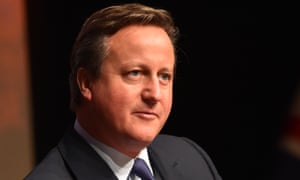
David Cameron pressed the owner of the Daily Mail to sack his avowedly pro-Brexit editor, Paul Dacre, in the run-up to last year’s EU referendum.
A source indicated that Lord Rothermere, whose family owns the newspaper, told Dacre that the then-prime minister had suggested he sack him, in a story that was first reported by the BBC’s Newsnight programme.
The Mail was one of the most vociferous voices for Britain to leave the EU before the 23 June referendum.
Dacre and Cameron met at the PM’s Downing Street flat on 2 February 2016, the day after Cameron’s planned new deal with the EU to ward off Brexit was announced.
There Cameron asked Dacre to “cut him some slack”, but was rebuffed - although the account has been denied by a spokesman for Cameron.
Early the following month, Dacre was told by a “Westminster source” that Cameron had sought to persuade Rothermere – who inherited French nationality, along with the newspaper, from his father for tax reasons – to sack him, making the editor “incandescent” and all the __more determined to push for Brexit.
It was only in July, after the referendum, that Rothermere personally told his editor of the pressure from Cameron.
A spokesman for Rothermere refused to deny the story. The spokesman said: “Over the years, Lord Rothermere has been leant on by __more than one prime minister to remove Associated Newspapers’ editors but, as he told Lord Justice Leveson on oath, he does not interfere with the editorial policies of his papers.”
Dacre said in a statement: “For 25 years, I have been given the freedom to edit the Mail on behalf of its readers without interference from Jonathan Rothermere or his father. It has been a great joy and privilege.”
A spokesman for Cameron said: “It is wrong to suggest that David Cameron believed he could determine who edits the Daily Mail. It is a matter of public record that he made the case that it was wrong for newspapers to argue that we give up our membership of the EU.
“He made this argument privately to the editor of the Daily Mail, Paul Dacre, and its proprietor, Lord Rothermere.”
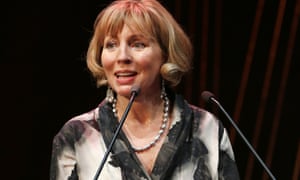
It is, of course, a pattern. James Harding, sometime editor of the Times, was appointed head of BBC news, whereupon Ian Katz, deputy editor of the Guardian, became editor of Newsnight. And now – pretty much out of the blue – Sarah Sands, below, editor of the Evening Standard and past chief at the Sunday Telegraph, takes over as editor of Today. So the three big news-and-current-affairs chairs in public service broadcasting have printers’ ink all over them.
Sands is a magician at spotting good features ideas. She’s charming: a great front-of-house operator. She’s the only experienced editor in London used to working Today hours (ie waking up in the middle of the night). Why leave the Standard? Maybe a complete change of medium and focus seems a great idea at 55.
But resist easy conclusions. One is that Sands is a tame Tory, chosen to balance the BBC’s supposed left-wing bias. She, like Katz, belongs in a far simpler category: down-the-line professionalism serving a defined audience. And the other conclusion? That she’s a soft answer to Today’s tugs of wars between ambitious and retiring presenters. Sarah’s no iron lady, but steely enough if pushed.
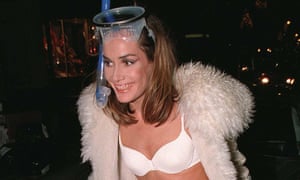
Just over 20 years ago, the society magazine Tatler put Tara Palmer-Tomkinson on its cover, along with fellow socialite Normandie Keith, and proclaimed them the It girls. “What does it say about us that we care so much about them?” asked the coverline. Their rise, and the rise of Palmer-Tomkinson in particular, always seemed to be about something bigger than the enduring fascination with beautiful young women in paparazzi-friendly dresses. They came at the end of the grunge years, and their privileged lifestyles reflected the start of London’s economic boom, but at the same time their rise seemed to mark the end of the old order.
It was the beginning of the end of the Sloanes, as international bankers and Russian oligarchs started buying up swaths of west London and pricing out the younger generation of English old-money families. It was probably the beginning of the end of going out. Palmer-Tomkinson was famous for her party-going, an idea that seems almost as old-fashioned as if she’d been a 20s flapper; now people stay in with Netflix. More than half the UK’s nightclubs have closed since 2005, and people have swapped alcohol and cigarettes for Fitbits.
And it came at the tail end of deference to the upper classes. Newspapers were impressed by the raft of society girls’ connections to the royals, but nobody I knew was. Palmer-Tomkinson was compelling because she seemed like enormous fun, but if you grew up in the 90s, you never thought she or the others (Tamara Beckwith, Keith and later Lady Victoria Hervey) were cool. Even while they were having their moment, the society It girls already seemed old-fashioned. They were naughtier than many of the debutantes of earlier decades, but definitely of the same type. They went out with ridiculous posh men and rarely seemed to leave west London, unless it was for a skiing holiday or a cruise on someone’s yacht. (Compare that with current aristo It girl Cara Delevingne, whose quirky edge and global Instagram reach means her poshness isn’t quite so defining.)
Babes on babes on babes. @caradelevingne @mileycyrus 👏🏾👏🏾👏🏾
A photo posted by Zoë Kravitz (@zoeisabellakravitz) on
But Palmer-Tomkinson was also the beginning of a huge cultural shift that not many of us could have imagined at the time. She wasn’t the first society It girl – the 30s and 50s especially had witnessed the rise and fall of extravagant, glittering socialites. But she was, says Wendy Holden, the journalist and novelist who ghostwrote her column in the Sunday Times, “famous for being the first person to be famous for being famous”. In the 90s, that was considered an insult.
“Being called talentless, that is the worst,” Palmer-Tomkinson said in a 2012 interview. “I can recite every line of Shakespeare. I’ve got a really good brain. Of course, I haven’t earned [fame] and I didn’t feel I was worth it, and going to all those endless parties, it made me feel worth a pile of shit.” Had Palmer-Tomkinson emerged now, she would never have had to justify herself. Instead, she paved the way for reality TV, Paris Hilton, any number of YouTube and Instagram stars and, of course, the reigning champions of self-promotion, the Kardashians. Criticising them is pointless. These are all cultural fixtures now.
Ellis Cashmore, visiting professor of sociology at Aston University and author of Celebrity Culture, recently discussed Kim Kardashian with a group of sixth-formers. “I said: ‘Is she talented?’ And there was no criticism at all that she was just famous for being famous.” They listed what they believed were her talents, such as what she does to attract publicity and the art of the selfie. “She can’t sing or dance or act, which we, over the 20th century, have decided to call talents,” he says. “But now we are in a transitional phase where people do different things, which are not talents that are immediately recognisable to older generations.”
Palmer-Tomkinson, he says, “prefigured this. The development has been so accelerated over the past 15 years.” Now, he says, “we don’t even query why they’re there in the first place. We don’t even think about the fact they are present on Instagram or Twitter, which makes them occupy space in our lives.” And it has been professionalised – social media accounts are carefully crafted, agents and publicists work to extend the longevity of even the most fleeting reality TV stars. There is a clear end goal: to monetise their fame.
‘Criticising them is pointless. They are cultural fixtures now’ … Kim Kardashian and Kanye West in Havana, Cuba in May 2016. Photograph: Desmond Boylan/AP
Palmer-Tomkinson, by contrast, never seemed calculating. She seemed big-hearted and genuine, fragile and someone who had stumbled into fame and its trappings because it seemed fun, not because of how much money she could make from it. “She had this amazing life anyway, she had all these friends, she was having lots of fun,” says Holden. “Also the persona we created for her was not entirely serious, otherwise no reader was going to sympathise with her. It had to be funny. We made her almost into a comic figure, but I think she could see the point of that, and had lots of funny things to contribute to it.”
It does feel like a different time now, where to be a celebrity is to be a brand. This also means, especially for young women in the public eye, fame is largely on their terms – with an Instagram account, they don’t, like Palmer-Tomkinson did, have to rely on being interesting to newspaper and gossip magazine editors (and she was never __more interesting to the tabloids than when she was self-destructing). Many of the people who become famous now are those who engineer it, via TV or social media, and carefully craft it. The element of randomness, the sudden elevation of a funny, spirited posh girl who never particularly asked for it, says Cashmore, “has largely disappeared”.
“While there’s no doubt she enjoyed it, Tara definitely took being famous less seriously than people do now,” says Holden. “I can’t imagine her operating 10 social media accounts at once, for instance. I don’t think she could have been bothered, and who could blame her?”
Who would have thought that one of the most politically relevant shows under the rise of Trump would be a cinematic screening of a Broadway musical arranged by Disney Theatricals?
Newsies the Musical is based on a real-life campaign in 1899, when the newsboys of New York – often orphans and street kids who sold the papers – started a strike for better pay that is credited with precipitating wide-reaching child labour reform.
The musical – inspired by David Nasaw’s book Children of the City: At Work and at Play, and a revivification of the 1992 Disney flop but cult favourite film (starring a young Christian Bale) – follows Jack Kelly (Jeremy Jordan), Crutchie (Andrew Keenan-Bolger), Davey (Ben Fankhauser) and a rag-tag group of children and teenagers hawking papers across New York City.
When Joseph Pulitzer (Steve Blanchard) raises the price of 50 papers from 50 to 60 cents per newsboy in a bid to lift profit without any sacrifice of his own, the gang – who already have to pay out-of-pocket for unsold papers and largely sleep on the streets – are pushed to a crisis point. Faced with the prospect of being unable to feed themselves or their families (if they have them), they hastily form a union and strike.
A call to arms: Christian Bale in the 1992 Disney film version of Newsies. Photograph: Snap/Rex
Newsies is a call to arms for the exploited and oppressed, urging grassroots action to organise, protest and agitate for change, and emphasising the importance of a fearless fourth estate to report injustice and stand as a watchdog for those without a platform.
All the newsboys want is fair recompense for hard work – and if boys selling “papes” on street corners are too difficult to relate to in 2017, there are plenty of examples of exploitation among the youth, new citizens and the broader working class to inspire empathy in contemporary audiences. Think of employees suffering in major fast food chains, afraid to speak out in case they lose their livelihoods, or prisoners whose labour yields them as little as 17 cents an hour.
Harvey Fierstein’s book is big-hearted and unabashedly political, a rallying cry from the working class writ large through Alan Menken’s anthemic, urgent score, and galvanised by Jack Feldman’s inspiring, angry and resolute lyrics about fists in the air and youth carrying the banner for freedom. “This is for kids shining shoes on the street / with no shoes on their feet every day,” the Newsies sing. “This is for guys sweating blood in the shops / while their bosses and cops look away.”
Jeremy Jordan as Jack Kelly in the Broadway show, which is being broadcast globally in cinemas. Photograph: Disney Theatrical Productions
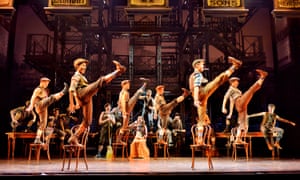
The revolution’s progress can be tracked via dance – because this is a dance musical, make no mistake. It’s balletic and athletic in that irresistibly American way. Choreographed by Christopher Gattelli, each member of the Newsies ensemble has a distinctive movement identity and character traits. It’s a boisterous, playful group, but as a collective they dance in joyous unison with sustained lines, their scrappiness evolving into strength.
This filmed staging of Jeff Calhoun’s national tour production comes close to replicating the rambunctious energy of the live show (the infectious Broadway staging received three standing ovations the night I attended in 2013), which is a near-impossible task and great achievement. Its secret weapon is the technical direction of London-based Australian Brett Sullivan, who also shot the live versions of Billy Elliot, Love Never Dies and the Miss Saigon 25th anniversary event. It’s Sullivan’s refined skill in translating ensemble numbers that helps this film maintain storytelling clarity – ensuring we don’t miss key moments of stakes-raising police brutality, or plot developments in the midst of a crowded stage brawl.
This production also introduces a brand new song, Letter From the Refuge, sung by Crutchie as he is locked in an orphanage. The threat of the prison-like refuge was always present in the Broadway staging but the addition of a song devoted entirely to it deepens the musical’s reach to the wider, __more shocking reality lived by many impoverished children.
Newsies : an instruction guide for anyone who feels powerless Photograph: Disney Theatrical Productions
As the narrative tension builds, Pulitzer, Hearst and their mogul pals call for a media blackout on the strike, and only Katherine (Kara Lindsay), building a career as a reporter beyond the social pages, is willing to cover it. Her solo number Watch What Happens addresses her writer’s block, her battles against a sexist workforce, her attraction to Jack Kelly, her commitment to the newsboy cause and the cause of all exploited children, as well as the capacity for a writer to help affect change by demanding justice – in just three minutes and four seconds.
With nods to real-life newsboy Kid Blink, pioneering journalist Nellie Bly and social crusader Mother Jones in the show’s DNA, Newsies the Musical is an accessible, relatable, song-and-danceable blueprint to youth-led revolution. And when action against powerful governments and corporations seems impossible, an instruction guide urging the powerless to band together becomes __more relevant than ever.
• Newsies: The Movie Event is screening in theatres around the world from Tuesday 14 February
Subeditors yesterday declared war on full-blown hyperbole amid fears a new tidal wave of mixed metaphors and dramatically overused cliches is both decimating clarity and opening a Pandora’s box of grammatical confusion.
Apologies, readers. But while it’s a parody of journalese, the above paragraph contains many of the tonal and verbal issues that consume subeditors’ precious time as we (hopefully) help transform the thousands of words crafted daily by reporters and writers into a vibrant newspaper.
All while trying to shake off the well-earned “Grauniad” reputation, of course.
On the news section of the newspaper, reporters write the articles, desk editors commission and finesse their copy, designers (or layout subeditors) liaise with picture editors and graphic designers to draw up pages, and, finally, subeditors check, correct, cut and coax the copy into the allocated space before getting to work on the all-important page “furniture”: headlines, subheadings, pullout quotations and picture captions.
As production editor, my job is to act as a link between the duty editor, news desks, page designers and subeditors. Along with other revise subs, I check over the subs’ work. I’m also responsible for subbing the splash (front-page lead story) – all while ensuring the news pages are “off stone” by the first edition deadline.
Each day, the subeditors on the Guardian news pages get through between 25,000 and 35,000 words. The finished product will never be perfect. Mistakes are made – and overlooked – all along the way. The corrections and clarifications column (now in its 20th year) bears testimony to this fact.
The column often shines a spotlight on the peculiarities of the “editing process”. But, as the latest edition of the Guardian Style Guide points out, we’ve come a long way. A comment piece on US politics in the 1960s contained the following: “Mr Nion was looking towards Washington, but the committee was liiking at Mr Nixon. He would have to oick the candidate, and if he oicked another man, eho lost, the party would be loth to nominate for the Preidency a national leader whose influence could not carry his own state in a state election. Yet, if Mr Noxon ran himself and won, he would practically forsweat the presidency.”
In the days of spell check, such a festival of typos is, thankfully, not likely to happen. However, subeditors have to be on their toes. We are, in footballing terms, the last line of defence; the nameless, faceless goalkeepers in the team. A howler in a front-page headline is there for all to see. An instant own goal.
So, apart from avoiding a guest entry in the column, what are our priorities when subbing?
Number one is you, the reader. We are, in many ways, the first readers. When a news story raises questions in our minds, we try to answer them. If we’re at all unsure about the facts of a story – the who, what, when, where, why and how – we seek clarity, with perhaps an added paragraph from the writer, a subtle rewording or the judicious insertion of an omitted background fact.
The subeditors’ room at the offices of the Manchester Guardian, 1958. Photograph: Bert Hardy/Getty Images
In the age of Trumpian “alternative facts” the need for the Guardian to retain its integrity as a trusted source of news is __more vital than ever. While the historian EH Carr rightly pointed out that not all facts were equal – “The facts speak only when the historian calls on them,” he wrote in his seminal text What is History? – the Guardian’s specific ethos, laid down by the long-serving editor CP Scott, decrees that facts for a journalist (chroniclers of the present) are “sacred”, whereas “comment is free”.
With a nod to these two complementary philosophies, subeditors play a crucial role in ensuring the accuracy of the information in stories. As well as checking, corroborating and verifying – the Guardian’s code of conduct urges care to avoid publishing “inaccurate, misleading or distorted” information – we try to create space for __more facts.
A good place to start is redundant words, which are more an alternative to facts than they are “alternative facts”.
Subeditors act as gatekeepers. Consistency, clarity and readability are the watchwords when it comes to grammar, syntax and house style. This may include rewriting botched sentences or inelegant variation, excising extraneous words and tautological phrases, converting figures (temperatures, currencies, distances etc),and amending the level of detail to fit what we see as the readers’ likely understanding.
A grasp of basic media law (primarily defamation and contempt risks) is also vital; not expertise, as such – that’s what our highly skilled lawyers bring – but an awareness of the basic principles so that, for example, we can quickly hack back a 1,000-word court report to 500 words while maintaining balance and fairness. Reporters take great care in constructing lively, balanced stories. Subs must ensure the (sometimes heavily) edited version in the paper retains that poise, accuracy and fairness.
It also pays to question presumptions of knowledge among readers.
As a Liverpudlian who works in London, one of my pet peeves in copy, and particularly picture captions, is a confusing lack of detail on place names. An image identified as “in Kensington” is never enough. There is more than one Kensington – and we must not presume all our readers are aware there’s actually one in London too.
Similar judgment calls extend to the favourite role of many subeditors: writing headlines.
It’s our chance to shine. While trying to “hook” the readers into the story with a vibrant, active and grabby headline, we are at all times committed to clarity and accuracy. A headline must reflect the story. It must be full of impact, but not too weak and not too strong. The parody headline above is a good example of what we avoid.
The legendary newspaper editor Harold Evans, in his book Newspaper Design, 1973, sums up the headline writer’s quest. “The whisper in the quiet room is as emphatic as the shout in the hubbub,” he wrote. “If every headline shouts, there is no emphasis.”
This is where the carefully orchestrated rhythm of a Guardian news page comes in. The use of different design formats, fonts and headline sizes (standard Guardian Egyptian headlines on newspaper pages range from 22.25 point to 60.25 point) help create a hierarchy on a page.
To fail in this mission, according to Evans, would be to “transform a humble enough newspaper into a Kafkaesque confusion”.
But enough of the perils of headline writing. Writing headlines for the Guardian is a pleasure. One of my favourites for simplicity and impact is the classic (subject, active verb, object) metaphorical phrase used to sum up the huge implications of George Osborne’s first coalition spending review in 2010. “Axe falls on the poor,” it announced, in 94 point (over 3cm tall), above a picture of Nick Clegg and David Cameron congratulating the chancellor for a job well done.
The other one that sticks out is an example of the sort of headline that, in a way, almost writes itself – but its effortless whimsy is all too often overlooked for something too clever by half or a weak and hackneyed pun. The story was the Conservative party’s desperate and futile attempt to rebrand itself – by objecting to the media’s use of the word “Tories” – at the height of Tony Blair’s New Labour dominance.
“Don’t call us Tories, say Tories,” ran the Guardian headline. Clear, accurate, devoid of cliched hyperbole – and a beguiling invitation to the reader to read on.
Wikipedia editors have voted to ban the Daily Mail as a source for the website in all but exceptional circumstances after deeming the news group “generally unreliable”.
The move is highly unusual for the online encyclopaedia, which rarely puts in place a blanket ban on publications and which still allows links to sources such as Kremlin backed news organisation Russia Today, and Fox News, both of which have raised concern among editors.
The editors described the arguments for a ban as “centred on the Daily Mail’s reputation for poor fact checking, sensationalism and flat-out fabrication”.
The Wikimedia Foundation, which runs Wikipedia but does not control its editing processes, said in a statement that volunteer editors on English Wikipedia had discussed the reliability of the Mail since at least early 2015.
It said: “Based on the requests for comments section [on the reliable sources noticeboard], volunteer editors on English Wikipedia have come to a consensus that the Daily Mail is ‘generally unreliable and its use as a reference is to be generally prohibited, especially when other __more reliable sources exist’.
London offices of the Mail titles. The Wikimedia Foundation urged Wikipedia editors to use media outlets ‘with caution’. Photograph: Dan Kitwood/Getty
“This means that the Daily Mail will generally not be referenced as a ‘reliable source’ on English Wikipedia, and volunteer editors are encouraged to change existing citations to the Daily Mail to another source deemed reliable by the community. This is consistent with how Wikipedia editors evaluate and use media outlets in general – with common sense and caution.”
The proposal was made by an editor known as Hillbillyholiday early in January, and fellow editors had weighed in with arguments for and against the ban over the past month. Those who opposed the move said the Daily Mail was sometimes reliable, that historically its record may have been better, and that there were other publications that were also unreliable.
Some of those who opposed the ban also pointed to inaccurate stories in other respected publications, and suggested the proposed ban was driven by a dislike of the publication.
Of the __more than 90 editors who contributed to the discussion, 58 expressed support for the ban, however the final decision was taken by editors designated as “closers”, who are authorised to enact consensus decisions.
Summarising the discussion, a Wikipedia editor wrote: “Consensus has determined that the Daily Mail (including its online version dailymail.co.uk) is generally unreliable, and its use as a reference is to be generally prohibited, especially when other more reliable sources exist. As a result, the Daily Mail should not be used for determining notability, nor should it be used as a source in articles. An edit filter should be put in place, going forward to warn editors attempting to use the Daily Mail as a reference.”
The move is likely to stop short of prohibiting linking to the Daily Mail, as there will be instances, such as when a Wikipedia entry is about the newspaper or one of its writers, when the editors believe a link is necessary. Instead a system for flagging any uses of the newspaper as a source will be introduced, asking editors not to use it and find alternatives.
The editors have also asked for volunteers to review about 12,000 links to the Daily Mail already on Wikipedia and replace them with alternative sources wherever possible.
The decision by Wikipedia comes amid widespread debate over the rise of fake news, which has widened to include concerns about misleading information in traditional publications. A recent BuzzFeed analysis claimed that there was “little appetite” for completely fabricated “fake news” in the UK because the country already had a highly partisan press.
Wikipedia was set up in 2001 by Jimmy Wales and Larry Sanger and has become one of the most popular websites in the world. It allows anyone to make edits, sometimes leading to instances of false entries and vandalism of pages, but is policed by thousands of people who regular weed out deliberate and accidental errors.
The site’s rules on reliable sources state: “Wikipedia articles should be based on reliable, published, sources, making sure that all majority and significant minority views that have appeared in those sources are covered ... If no reliable sources can be found on a topic, Wikipedia should not have an article on it.”
A spokesman for Mail Newspapers said that only a tiny portion of the site’s millions of anonymous editors had been involved in the decision, adding: “It is hard to know whether to laugh or cry at this move by Wikipedia. For the record the Daily Mail banned all its journalists from using Wikipedia as a sole source in 2014 because of its unreliability.
“Last year, the Daily Mail and MailOnline together published more than half a million stories and yet received just two upheld adjudications each for inaccuracy from the UK industry’s regulator IPSO.
“All those people who believe in freedom of expression should be profoundly concerned at this cynical politically motivated attempt to stifle the free press.”
This article was updated on 9 February to include the Mail Newspapers’ response
The Law Commission is an important body with a proud history. Set up in 1965 to provide independent advice to government on law reform, it describes itself as non-political and has often made meticulous recommendations on overlooked but vital areas of the statute book, from criminal and family law to that governing property, trusts and other areas of commerce. Its status, value and prestige have been greatly enhanced by a succession of judicial chairs, usually of the high court and then promoted to the court of appeal.
Yet in an age of high-octane media and politics, legislative policy has been driven __more by kneejerks and soundbites than reason and research. The commission has felt neglected, with too many reports unimplemented by parliament, and it may be concerned for its long-term future. Some years ago I was visited in my Liberty office by commission officials concerned about their declining brand and influence, and with a healthy curiosity as to how better to communicate with the world beyond Whitehall. So the government’s invitation to the commission in 2015 to look at what is bureaucratically called the “protection of official data” must have caused considerable excitement.
Coming two years after Edward Snowden’s revelations on the blanket surveillance of entire populations without parliamentary or judicial sanction and with an extremely spurious basis in law, no one can have imagined this to be a routine spring clean of the Official Secrets Act or simple “future-proofing”, as was suggested in the consultation paper published on 2 February. This is an extremely political area of the law, and venturing into this territory brings great risk to an independent body that would never want to be seen as a proxy for any government or the security state.
This is why there is considerable concern about the consultation process so far, and the fact that only seven weeks remain for public input – let alone some of the provisional recommendations.
Protecting national security is important, but investigative journalism and individual ethics have a place in democracy
Then there is the lopsided nature of who has been consulted. It seems that government departments, the police and security agencies have understandably had the ear of the commission, but no journalists or past whistleblowers. Three NGOs are said to have been consulted, but they don’t seem to agree that this happened. Finally, and tellingly, the consultation paper was not openly launched in the media. It was given as an exclusive to a publication thought to be onside. A commission spokesperson is said to have explained that this was because that “it’s a nuanced issue. We wanted to secure an opinion editorial first.” That is spin worthy of a political operation, not public communication from a quasi-judicial body.
The provisional recommendations include sentencing provisions stipulating draconian jail sentences, which place leaking and whistleblowing in the same category as spying for foreign powers. According to the proposals, these sentences would apply to any leaker, whether or not they were a British citizen or operating within the UK. More alarmingly still, the commission says there should be no statutory public interest defence for anyone accused of the offences. Threatened by such grave consequences and offered little-to-no legal protection, it is surely __more than we can ask of any journalist or genuine whistleblower to come forward in order to protect the public interest.
Journalists and the whistleblowers with whom they work perform an essential service in ensuring transparency – often where government would keep us in the dark. There are at present very few means by which wrongdoing within government agencies can be exposed, and as a consequence it falls to individuals. There is no question that protecting national security is important, but public interest journalism and individual ethics have their place in democracy alongside security and the law.
With just a few weeks left for the consultation, I hope the commission will seek to get it back on track by reaching out to the journalists, human rights lawyers and whistleblowers who have so far been excluded from the process. It is essential for the credibility of the report (and the commission) that a greater balance between the two sides of this debate are reflected. In this brief window, I also urge the wider public to get involved, responding to the commission’s call for input. In this age of Donald Trump, democracy has to be about more than filling a ballot box every few years.
• You can contribute to the consultation by emailing pod@lawcommission.gsi.gov.uk